Reporting remains manual work
Combining, checking and repairing exports again every month.
Datalab brings all your sources together in one reliable data platform. With Datalab Studio you do not just get storage, but also the pipelines, data models, BI connections and support needed to steer your organisation with data every day.
These are situations we often encounter. Recognise them? Then it is time to bring data together structurally, document definitions and make reporting less dependent on loose exports or individual specialists.
Combining, checking and repairing exports again every month.
Dashboards show numbers, but the underlying source data is fragmented or unclear.
Finance, operations and sales use different definitions or reference dates.
Too much logic sits in the BI layer, making reports fragile and slow.
Forecasting, Python, R and AI need clean, repeatable datasets.
A data warehouse makes methods, definitions and data flows transferable.
A data warehouse is the central, structured place where data from your systems comes together for reporting and analysis. Source systems run your organisation; the data warehouse helps explain what is happening in that organisation.
In Datalab Studio, the data warehouse is part of a wider whole. We unlock sources, set up pipelines, retain history, document definitions and make data usable for dashboards, analysis and AI applications.
Datalab Studio is the managed data platform behind your data warehouse. It combines source integration, processing, storage, data models and access for the people who work with data.
The solution is modular. You can start small with the first sources and dashboards, then expand later with new connections, data models, analyses, AI applications or complete BI environments.
Does the same stack need to run in Dutch or European cloud, on your own servers or in a hybrid model? Then this service connects to our Sovereign Cloud Dataplatform.
We can also help with the layers after the data warehouse: dashboards, reports, analytical models, forecasting and practical AI applications.

AI only works well when it can trust the data beneath it. A data warehouse brings data from your applications together, records definitions and makes clear which figures may be used for which purpose. This means an AI model can not only answer faster, but also provide better-supported answers.
Datalab can connect the data warehouse to AI models, for example through MCP connectors. Users can then ask ordinary questions about one system or several systems at once, without knowing SQL or Power BI. The answers come from controlled datasets and fixed data models. When the data is too uncertain, we prefer to configure the system so it gives no answer rather than a misleading conclusion.
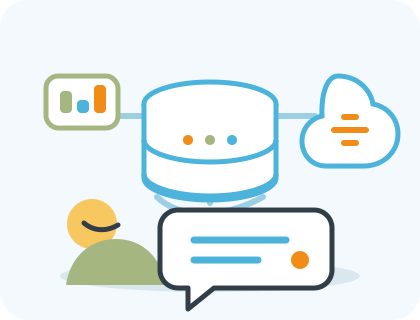
A well-designed data warehouse does not only make data available; it makes data usable. It prevents recurring manual work and gives teams a foundation they can trust.

For most management information, a data warehouse is the analytical foundation. A data lake is useful for raw or unstructured data. A data platform brings the parts together so sources, storage, models and users connect logically.
Datalab advises independently on the setup that fits your situation. Sometimes a compact data warehouse is enough; sometimes a combination with a data lake or existing cloud environment makes more sense.
Datalab works for retail, accountancy, public organisations, healthcare, logistics and knowledge-intensive teams.
They also trust Datalab
You do not need to know exactly what your data warehouse should look like in advance. We start with your goals, sources and users, then build iteratively towards a platform that works in practice.
After delivery, we can also help with dashboards, reports, analytical models and AI applications on top of the same reliable data foundation.
100% independent
We are not tied to software vendors or cloud providers. Your situation determines the technology.
We determine which management information is needed and which systems are relevant.
We choose a practical setup for cloud, on-premises or hybrid deployment.
We unlock the first sources, document definitions and deliver usable datasets.
We then grow with extra sources, dashboards, analyses, training and management.

Sometimes a data warehouse is mainly a technical question: sources need to come together reliably and your own CFO, controller or BI team can continue from there. In that case we keep the project technical and compact.
If that capacity is missing, or your team is already stretched, we can work together with BPO - De Administratie. Datalab provides the data platform, data models and, where needed, BI or analytics support; BPO helps as a part-time CFO/controller with KPIs, sharp definitions, reporting, budget control and the financial interpretation of the figures. The result is not just a working platform, but management information that leadership can actually act on.
Datalab can unlock any source. The catalogue below is growing into a complete overview of systems we often encounter. Is your system not listed? We will look at the API, database, export options or a custom connector.
For search engines and source detail pages, there is also a full source overview.

AFAS is a broad ERP platform for finance, HR, payroll, projects and business processes. Because several departments work in the same system, AFAS data is often a rich source for management information.
View source
Akeneo is a PIM platform for product information. Teams use it to manage product data, attributes, classifications and content centrally before publishing to webshops, marketplaces or other channels.
View source
Amazon is an important sales channel and marketplace for many sellers. Its data covers not only orders, but also listings, performance, stock, fees and customer interaction.
View source
Basecone digitises invoice and booking document processing. For finance teams and accountants, it contains valuable information about document flows, processing statuses and administrations.
View source
bol.com is an important marketplace channel for many retailers and brands. Orders, listings, delivery performance, returns and channel statistics provide insight into commercial performance.
View source
bpost is a logistics source for shipments, delivery and parcel statuses. For webshops and operations teams, this data is important for tracking delivery times and service quality.
View source
Budbee is a delivery and last-mile source for e-commerce logistics. Its data centres on shipments, delivery windows, statuses and customer-focused fulfilment.
View source
CBS provides official statistical datasets about the Netherlands, from tabular figures and indicators to more complex geographic data.
View source
Channable is used to manage product feeds, marketplace channels and advertising feeds from one environment.
View source
Chargebee supports subscription billing, recurring revenue and subscription management. Its data is valuable for revenue recognition, churn, invoicing, contracts and customer value.
View source
commercetools is a headless commerce platform for organisations that want to configure commerce flexibly through APIs. Products, carts, orders, customers and channel processes generate a lot of data.
View source
CreditDevice supports credit management, debtor management and risk assessment. Its data helps finance teams better understand payment behaviour, credit risks and follow-up.
View source
Not every valuable source has a familiar SaaS name. Crucial data often lives in an internal database, custom application, export folder or source-system API.
View source
Daywize supports HR processes, absence management, personnel administration and workforce-related information. Its data is important for reporting on employees, availability and organisational processes.
View source
DeliveryMatch supports shipping choice, delivery management and fulfilment processes for e-commerce. Its data says something about carriers, delivery options, shipments and service choices.
View source
Delogue is used in fashion and product development to manage collections, suppliers, materials and product communication. This makes it a valuable source of product and supply-chain information.
View source
DHL Pakket contains data about shipments, labels, tracking and delivery statuses. For webshops and operations teams, this information is essential for tracking delivery reliability and costs.
View source
DPD is a logistics source for parcel delivery, tracking and delivery statuses. Its data helps make shipping performance, lead times and exceptions visible.
View source
Dyflexis supports staff scheduling, time registration and workforce management. For organisations with rosters, locations and teams, it contains data about staffing, availability and worked hours.
View source
e-Brida is software for the seed and breeding sector, covering pedigrees, trials, observations, photos, field registration and analyses.
View source
Exact Globe is an ERP and financial system often used for administrations, general ledger, sales, purchasing, stock and business processes.
View source
Exact Online is the administrative heart of many organisations. Invoices, bookings, debtors, creditors and sometimes projects, CRM or stock come together there.
View source
FedEx provides shipment, tracking and delivery data for international and domestic logistics. For fulfilment and service-quality reporting, this data is valuable alongside orders and customer information.
View source
Fiscaal Gemak is used for tax processes and filing work in administrative or accountancy environments. Its data is relevant for progress, statuses, client files and accountability reporting.
View source
Freshdesk is a platform for customer service and ticket handling. Tickets, conversations, statuses, SLAs and customer questions provide insight into service quality and workload.
View source
Fulfilment Crowd supports fulfilment, storage and shipping processes for webshops and brands. Its data centres on orders, stock, shipments and operational processing.
View source
Gearbox is a source that can appear in agricultural and cultivation processes, for example around vision AI, quality control or operational observations.
View source
Genesys is used for customer contact, contact centres and omnichannel service processes. Calls, waiting times, interactions and routing provide valuable data about customer service.
View source
GitHub is where software teams manage repositories, issues, pull requests, releases and workflows. For organisations steering software development, it contains valuable process data.
View source
Google Ads contains campaign, ad, keyword and conversion data that marketing teams use to steer paid search traffic. Separate campaign reports only tell part of the story.
View source
Google Analytics measures website and app usage, events, conversions and traffic sources. The data becomes manageable when it is linked to commercial or operational outcomes.
View source
Hotjar provides insight into user behaviour through heatmaps, session recordings, feedback and forms. It shows where visitors drop off or get stuck, but often sits apart from hard conversion and customer data.
View source
HubSpot combines CRM, marketing automation, sales and service processes. Leads, deals, campaigns, contact moments and tickets together create a rich customer view.
View source
Instagram Ads contains advertising performance around campaigns, audiences, creatives and conversions within the Meta ecosystem. For marketing teams, this data is most valuable alongside cross-channel results.
View source
Itsperfect is a cloud ERP solution for fashion brands. The platform brings ERP processes together with B2B webshop, POS, PLM, WMS, wholesale, retail and customer data.
View source
Jira supports teams with project management, software development and issue tracking. Issues, sprints, statuses, lead times and priorities provide insight into workload and progress.
View source
Kantoor Gemak supports administrative and accountancy processes around client files, workflows and office organisation. Its data helps make progress, workload and client service visible.
View source
Klaviyo is a marketing automation platform for e-commerce, email, SMS and customer segmentation. Campaigns, flows, profiles and revenue contribution provide valuable marketing data.
View source
KNMI provides weather, climate and measurement data that organisations use for planning, risk analysis, policy and operational context. Its value often lies in combining it with your own time series, locations or events.
View source
Lightspeed is used for point-of-sale processes, sales, stock and retail or hospitality reporting. Its data is highly operational: transactions, products, locations, customers and stock movements come together there.
View source
Loket brings payroll processing, HR data and personnel information together in one environment.
View source
Mailchimp supports email marketing, lists, campaigns and automations. Open rates and clicks are useful, but become more valuable alongside customer, revenue and conversion data.
View source
Matomo is an analytics platform for organisations that want to measure website behaviour, campaigns and digital conversions with more control over privacy and data ownership.
View source
Meta Ads covers advertising data from channels including Facebook and Instagram.
View source
Microsoft Ads contains advertising performance from the Microsoft search network, including campaigns, keywords, costs and conversions. In reporting, this channel is often viewed alongside Google Ads and social advertising.
View source
Microsoft Dynamics 365 Business Central is an ERP solution for finance, sales, purchasing, stock and operations. For many organisations it is a central source for business processes.
View source
Microsoft Dynamics Customer Engagement supports CRM processes such as sales, marketing, service and customer relationships. Its data provides visibility into accounts, opportunities, activities and customer interactions.
View source
Multivers, formerly Unit4 Multivers and now part of Exact, is business software for SMEs covering accounting, HR, payroll administration and office automation.
View source
Navision, often known as Microsoft Dynamics NAV, is an ERP system for finance, sales, purchasing, stock and operations. Many organisations have built years of process history in it.
View source
Nmbrs Payroll is used for payroll processing, HR processes and personnel information. For accountants, HR teams and employers, it contains data about employees, payroll runs, contracts and changes.
View source
Ovatic is a platform for cultural institutions around planning, ticketing, marketing and CRM. Programmes, venue occupancy, ticket sales, subscriptions and audience profiles come together there.
View source
PE-Online is used for continuing education, accreditation, quality registrations and professional development. Its data is often important for progress, accountability and signalling.
View source
Picqer is warehouse software for webshops and fulfilment teams. Orders, pick lists, stock locations, shipments and processing times come together there.
View source
PostNL contains logistics data about parcels, labels, tracking and delivery statuses. For retail and e-commerce, this data is important for tracking delivery reliability, delays and customer impact.
View source
Returnless supports return processes for e-commerce. Its data shows which products are returned, why customers return them and how return flows develop.
View source
Salesforce is a broad CRM platform for sales, service, marketing and customer relationships. Accounts, opportunities, activities, cases and forecasts form an important commercial source.
View source
SendGrid is used for transactional email and email campaigns. Delivery, opens, clicks, bounces and events provide insight into communication quality.
View source
Shopify is a widely used commerce platform for webshops. Orders, products, customers, discounts, payments and stock provide a rich view of online sales.
View source
SmartFMS, from the BlueLemon24 environment, helps organisations with client files, processes, tasks, hours, invoicing and central case-file management.
View source
Snapchat Marketing contains advertising data around campaigns, audiences, creatives and conversions on Snapchat. For marketing reporting, this data is most useful alongside other paid channels.
View source
Storescan provides visitor counts and in-store analytics for retail, real estate and locations.
View source
SurveyMonkey is used to collect surveys, feedback and research results. Responses provide context for customer satisfaction, employee signals or market research.
View source

Teamleader combines CRM, sales, projects and invoicing processes for commercial teams and service providers. This creates rich context about customers, deals, activities, projects and follow-up.
View source
TikTok Marketing contains advertising data about campaigns, creatives, audiences, costs and conversions on TikTok. For a complete marketing view, this channel is usually compared with search, social and webshop data.
View source
Trunkrs is a logistics source for same-day and next-day delivery in e-commerce. Shipments, statuses and delivery moments provide insight into operational performance.
View source
Trustpilot collects reviews and customer ratings. Its data provides valuable signals about satisfaction, reputation and areas for improvement.
View source
UPS provides tracking, shipping and delivery data for logistics processes. For operational reporting, this data is valuable alongside orders, returns and customer contact.
View source
V-smart is an integrated library system from Axiell for collection management, lending, catalogue management, order administration, journal management, reporting and public catalogue.
View source
Vektis manages and publishes healthcare data that organisations use for analysis, policy, accountability and sector insight. That data becomes more valuable when placed alongside your own healthcare, finance or policy data.
View source
WolkyTolky is relevant in agricultural environments where weather, measurement and sensor data from fields or cultivation processes is used.
View source
WooCommerce is a webshop platform inside WordPress. Orders, products, customers, coupons, payments and stock provide a rich view of online sales.
View source
Zendesk is used for support, tickets, customer contact and service processes. Tickets, statuses, channels, SLAs and customer interactions provide insight into service quality and workload.
View sourceA data warehouse is the structured storage and analysis layer. Datalab Studio is the wider data platform around it: source integration, pipelines, data lake where needed, data models, BI access, management and support.
Often yes, especially when reports combine several sources, become slow or require a lot of manual work. BI tools remain valuable, but the data warehouse ensures that data is reliable and prepared before it reaches dashboards.
In most cases, yes. We investigate which route fits each source: API, database connection, export, file exchange or custom integration. Also see the source catalogue.
That is not a problem. The catalogue shows sources we explicitly want to document, but Datalab can also unlock other systems. We look at the technical options and advise on the most stable route.
No. We can work in cloud environments, EU or Dutch cloud, on-premises and hybrid situations. Datalab is vendor-independent and chooses the setup that fits your requirements around security, management and cost. Also see our Sovereign Cloud Dataplatform.
Yes. The data warehouse, pipelines, BI layer and analytics can run in a sovereign cloud, on your own infrastructure or in a hybrid model. We choose the setup based on your requirements around data ownership, compliance, management and future portability.
Yes. We can assess, clean up, extend or better document existing environments. Sometimes improving is wiser than starting again.
Yes. You do not need to arrive with a fully developed plan. We map goals, users, sources, risks and first use cases, then translate them into a practical roadmap. Also see our data strategy service.
Datalab works for organisations in, among others, retail, e-commerce and trade, accountancy, logistics, the public sector, healthcare-related environments and knowledge-intensive teams. We build data platforms for commercial management information as well as sensitive or governance-heavy contexts. The client logos on this page give an impression of that breadth.
Both. A data warehouse only works when definitions, processes and user needs are right. That is why we combine data engineering with advice, KPI definitions, data modelling, dashboards, training and adoption.
Yes. After the data foundation, we can also realise dashboards and BI, analytical models, forecasting, Python/R workflows, AI applications and process automation. Also see dashboards & BI, analytics & AI and Process Automation.
Datalab is a good fit when you need more than separate technology: source integration, data warehouse, data modelling, dashboards, analytics and adoption need to work together. We are independent of software vendors, build iteratively and have experience with a wide range of sectors and data sources.
If you only need a licence or a loose connector, a software vendor may be a better fit. For short-term capacity, we can provide specialist consultancy, for example around data engineering, BI, data modelling or platform choices. Datalab is strongest when temporary support is part of a reliable data foundation that works technically and is actually used by the organisation.
That depends on the sources and the first use case. We usually start with a short inventory, then plan a compact first delivery and expand iteratively from there.
In a short call we map your sources, goals and technical context and outline a feasible first step.
Schedule a call